

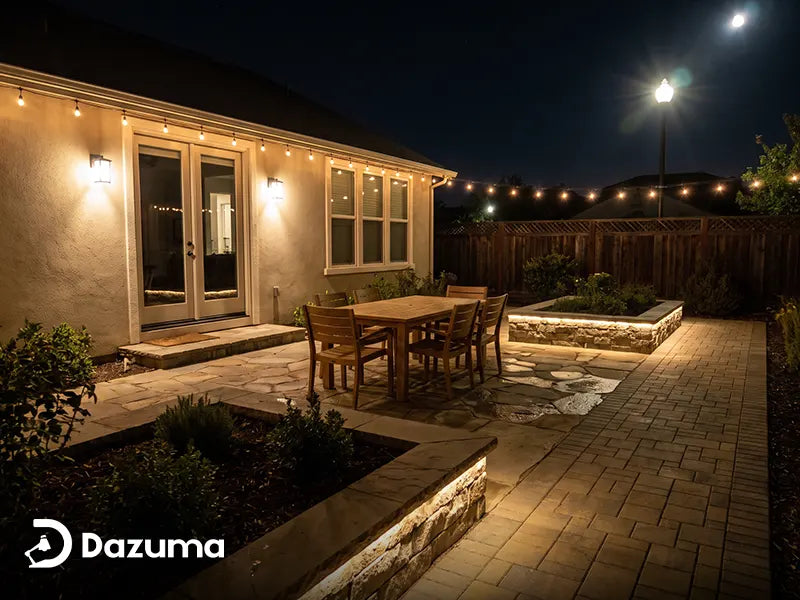
Outdoor lighting can change the way a home looks and functions after sunset. A dark front entrance can feel uninviting, a poorly lit garage may be inconvenient when arriving home late, and side passages that seem easy to navigate during the day can become difficult to use at night.
Wall-mounted exterior lighting is one of the simplest ways to improve these areas because it provides illumination without taking up space on pathways, lawns, or patios. The right fixtures can help identify entrances, improve visibility, highlight architectural details, and create a more welcoming appearance.
The key is choosing outdoor wall lights according to what each area actually needs rather than installing the brightest fixture available.
Well-positioned outdoor wall lights can improve nighttime visibility while strengthening the appearance of a home’s exterior.
Start With the Front Entrance
The front door is usually the most important place to begin because it needs to work as both a practical entrance and a visual destination.
Lighting should make it easier to see steps, door hardware, house numbers, packages, and visitors. It should also help guests understand immediately where they are expected to enter.
A symmetrical entrance can often support a pair of wall lights positioned on either side of the door. Smaller entrances may work better with one fixture beside the doorway, especially when windows, columns, or architectural trim limit the available wall space.
Before choosing a fixture, compare its dimensions with the size of the door and surrounding façade. Small wall lights can appear insignificant beside a wide entrance, while oversized fixtures may make a compact porch feel crowded.
Give the Garage Enough Light Without Creating Glare
Garage lighting has to perform a slightly different job.
It can help homeowners park, unload groceries, move between the vehicle and the house, and see the surrounding driveway more clearly after dark. Wall fixtures positioned beside or above the garage opening are common choices.
However, extremely bright lights are not automatically better. A strong exposed source can create glare and make the darker sections beyond the driveway harder to see.
Fixtures that control or diffuse the light can often provide more comfortable visibility. The light should reveal the garage and immediate driveway area without shining directly toward drivers, neighboring homes, or the street.
Choose Light Direction According to the Wall
Outdoor wall fixtures can distribute light in very different ways.
A downward-facing light can illuminate an entrance, walkway, or patio surface while keeping the source relatively controlled. Up-and-down wall lights create vertical beams that emphasize the architecture and can make a plain exterior wall feel more visually interesting.
Lantern-style fixtures may distribute illumination more broadly, while compact architectural designs can create narrower and more decorative light patterns.
Homeowners comparing different types of Outdoor Wall Lighting should therefore look at beam direction, fixture dimensions, mounting height, finish, and intended location rather than judging a product from its daytime appearance alone.
Use Lighting to Highlight Exterior Materials
Wall lighting can reveal textures that disappear after sunset.
Brick, stone, timber cladding, stucco, and other exterior finishes may look completely different when light travels across the surface rather than hitting it directly from the front.
A carefully positioned up-and-down light can emphasize vertical texture, while a downward beam can reveal the material around an entrance without illuminating the entire façade.
This is especially useful during an exterior renovation. If homeowners are investing in new stonework, siding, paint, or architectural details, the nighttime lighting plan should help those improvements remain visible rather than allowing the exterior to disappear into darkness.
Do Not Forget Side Entrances
The front door receives most of the attention, but it may not be the entrance the household uses most often.
A door connecting the garage to the house, a side gate, a mudroom entrance, or a passage leading to the backyard can all benefit from wall-mounted lighting.
These areas may only be used briefly, so motion-activated lighting can sometimes be practical. The fixture can remain off when the area is empty and provide temporary illumination when someone approaches.
Whatever control method is used, make sure the light covers the actual walking surface and doorway instead of simply creating a bright patch on the wall.
Make Patios Feel More Comfortable
Outdoor wall lights are also useful around patios and decks, but the lighting needs are different from those of a driveway.
People may spend several hours eating, talking, or relaxing on a patio, so excessive brightness can quickly become uncomfortable.
Wall-mounted fixtures can provide one layer of general illumination, while smaller landscape lights, floor lamps, or other softer sources can be used around seating and planting.
Several lower-intensity light sources usually create a more inviting outdoor living area than one powerful wall fixture attempting to illuminate the entire patio.
Coordinate the Fixtures With the Architecture
Outdoor wall lights remain visible throughout the day, which means they should be treated as part of the exterior design rather than purely functional equipment.
Simple black or dark metal fixtures often complement contemporary houses, particularly when the property also has black window frames, railings, or door hardware. Lantern-style designs can suit more traditional façades, while brass or warmer finishes may work naturally with brick, timber, and stone.
The fixtures do not necessarily need to match every other exterior element exactly. Repeating one finish, shape, or design language is usually enough to create continuity.
Broader collections from lighting brands such as Dazuma can also help homeowners compare wall lights with other outdoor fixture types when they are planning several exterior areas at the same time.
Keep Color Temperature Consistent
Light color has a strong influence on how a house feels at night.
Warm white illumination is commonly used around residential exteriors because it tends to complement timber, brick, stone, plants, and the warm interior light visible through windows.
More important than choosing one exact color temperature is maintaining reasonable consistency. A warm entrance beside very cool garage lighting can make the façade feel disconnected.
If new fixtures are being added to an existing system, compare the light color with nearby porch, landscape, and pathway lights before purchasing.
Check That the Fixture Is Suitable for Outdoor Use
An exterior wall light must cope with conditions that an indoor fixture never experiences.
Rain, humidity, dust, direct sunlight, heat, cold, and wind can all affect performance over time. Exposure also varies depending on installation location.
A fixture mounted beneath a deep covered porch experiences far less direct weather than one installed on an exposed garage wall. Always check the manufacturer’s stated outdoor suitability and installation requirements for the specific location.
Material and finish should also be considered, particularly in coastal or very humid areas where outdoor metals may face more demanding conditions.
Think About Mounting Height Before Installation
Even a well-designed fixture can perform poorly if it is mounted in the wrong position.
A light installed too high may not provide enough illumination near the entrance. One positioned too low may produce glare at eye level or interfere with people walking past.
Door height, garage dimensions, fixture projection, nearby windows, and the direction of the beam all affect the ideal position.
Before drilling or making permanent electrical changes, mark the approximate fixture dimensions on the wall with painter’s tape. Viewing the outline from the driveway and street can make scale problems much easier to identify.
Use Timers and Sensors Where They Add Convenience
Outdoor lighting does not always need to operate from sunset until sunrise.
Timers or dusk-based controls can automate frequently used entrance lights, while motion sensors may work better around side doors, garages, and service areas.
Separating exterior areas into different control zones can also help. The front entrance might remain illuminated through the evening while patio or decorative wall lighting turns off earlier.
This allows the lighting system to follow actual activity instead of illuminating empty areas continuously.
Final Thoughts
Outdoor wall lighting can improve both the practical and visual side of a home after dark.
Start with frequently used entrances, garages, and walking routes. Choose fixtures according to the direction and amount of light they provide, then consider how their scale and finish relate to the architecture during the daytime.
The goal is not to cover every wall in bright light. A smaller number of carefully positioned fixtures can make entrances easier to use, reveal attractive exterior materials, and create a more welcoming appearance without overwhelming the property.
When placement, brightness, weather suitability, and design are considered together, outdoor wall lighting becomes more than a decorative upgrade. It becomes part of how the home works and feels every evening.








Leave a Reply