

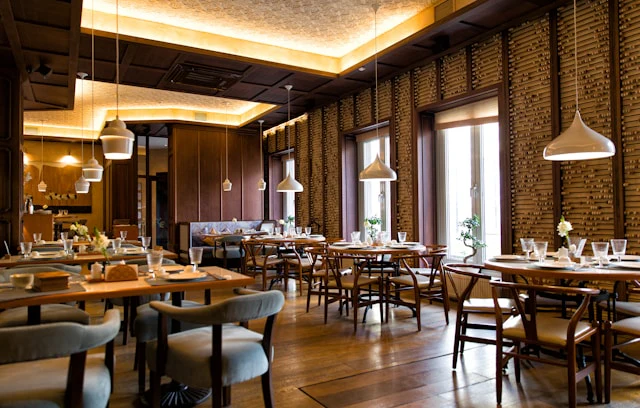
Ever walked into a place and known, before the menu even hit the table, that it was going to be good? Something about the room just read as expensive. The lighting helped, sure. But the thing your eye actually landed on, even if you could not name it, was the furniture.
Here is the secret nobody in hospitality says out loud: a room looks costly long before anyone tallies what it costs. The signal comes from a handful of cues the brain reads in about a second, and most of them live in the seating and the tables. Get the restaurant furniture right and a modest budget can feel like a splurge. Get it wrong and a fortune in finishes still reads as cheap. So what exactly is the eye picking up on?
It Starts With Things Matching
Walk through a space where the chairs, the table bases, and the bar stools all speak the same design language, and your brain relaxes. Everything belongs. That coherence is the loudest expensive cue there is, and it costs nothing but planning.
Mismatched furniture does the opposite. A room that looks like it was assembled from whatever was on sale tells guests the owner was guessing. One finish, one family of shapes, one consistent metal tone across the room, and suddenly the place looks curated, whether it is aiming for a casual cafe or a polished brasserie. People read intention as money, even when the pieces themselves are reasonable.
Solid Materials Have a Sound
Pull out a chair in an expensive-feeling room and notice the weight. It moves with a certain heft, sits without a creak, and meets the floor without that hollow clatter of thin tube steel. Your hands know the difference before your eyes confirm it.
That heft is real. A weighted cast base, a solid wood seat, a frame that does not flex tell the body it is built to last. Cheap furniture announces itself the moment you touch it, light, rattly, faintly plasticky. The brain files that sensation under budget instantly. Substance reads as value, and there is no shortcut around it.
Proportion Is the Quiet Genius
Why does one room feel calm and gracious while another feels cramped and twitchy? Often, it comes down to proportion: the relationship among seat height, table height, and the space around each chair. When those numbers are right, nobody notices. When they are off, everybody feels it.
A chair that sits too low under its table, a stool with no footrest, a four-top jammed where a two-top belongs, each one quietly broadcasts that corners were cut. Generous spacing alone, the kind that gives a couple of feet of room per seat, reads as luxury because it implies the owner valued comfort over packing in covers. Roominess is one of the most expensive cues going.
The Cues Your Brain Reads in a Second
Want to know what your eye is actually clocking when a room feels high-end? It usually comes down to a short list:
- Finishes that match across chairs, tables, and stools instead of fighting each other.
- Real weight and solidity you can feel the moment you sit or lean.
- Clean, intentional spacing that never feels packed.
- Proportions where the seat, table, and footrest all line up correctly.
- Upholstery and surfaces that look maintained, not worn or sticky.
None of these requires the most expensive line in the catalog. They require choosing pieces that work together and treating proportion as seriously as color. That is the whole trick, honestly.
The Texture You Reach For Without Thinking
There is one more layer the eye trusts: surface. A leather-look seat that feels supple, a wood top with visible grain, a powder-coated frame with an even, durable sheen, these textures register as premium because they hold up to touch and time. The science of upholstery is really the science of a surface that still looks good after a thousand guests have used it. Cheap vinyl cracks, thin laminate peels, and the room ages badly in months.
So the expensive look is less about spending big and more about choosing well. Match the finishes, pick pieces with real substance, respect proportion, and give the room a little breathing space. Do that, and guests will walk in, feel the quality before they can explain it, and quietly assume the meal is worth more than it costs. The furniture made the promise before the kitchen ever had to keep it.













Leave a Reply